
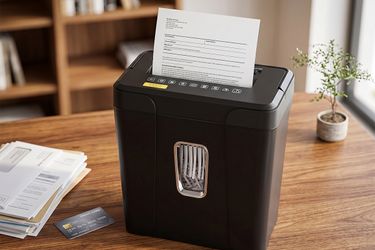
The Ultimate Paper Shredder Buying Guide for 2026
Buying a paper shredder sounds simple until you start comparing models. One machine shreds six sheets, another handles twelve.One of the biggest differences between paper shredders is the cutting method—some use cross-cut blades, while others rely on micro-cut technology to create much smaller paper particles. Add features like anti-jam technology, auto start, quiet operation, and different security levels, and it's easy to feel overwhelmed.
This paper shredder buying guide is designed to make that decision easier. Instead of focusing on technical jargon, we'll explain the features that actually matter in everyday life, whether you're organizing household paperwork, working from a home office, or simply looking for a safer way to dispose of personal documents. By the end, you'll know exactly what to look for—and which type of shredder best fits your needs.
Assess Your Home Office Needs
Before comparing specifications, think about how you'll actually use your shredder. The best model isn't necessarily the one with the highest sheet capacity or the strongest motor—it's the one that matches your daily routine.
Before choosing a shredder, consider the following questions:
- How often do you shred documents?
- Are you mainly disposing of junk mail and receipts, or confidential financial records?
- Will more than one person in your household use the shredder?
- Do you have limited space for office equipment?
- Is quiet operation important because you work from home?
For many households, paper shredding is an occasional task. Bills, credit card offers, shipping labels, and expired documents gradually build up over time. A compact shredder designed for home use is often more practical than a large commercial machine that takes up unnecessary space.
If you work remotely or manage household finances from a dedicated workspace, you'll likely shred documents more frequently. In that case, choosing a model with a slightly higher sheet capacity and a larger waste bin can make the process much more convenient.
Noise is another factor that's often overlooked until you actually start using the machine. For home offices and shared workspaces, a quieter shredder helps maintain a more comfortable environment by reducing distractions during meetings, calls, and study sessions. Combined with anti-jam technology, it also makes everyday shredding much less frustrating.
Ultimately, the goal isn't to buy the biggest shredder available—it's to find one that fits naturally into your routine and encourages you to dispose of confidential documents safely instead of letting paperwork pile up.
Sheet Capacity Explained
One of the first specifications you'll notice is sheet capacity, which tells you how many sheets of paper a shredder can process at one time. While higher numbers may sound more impressive, bigger isn't always better for home users. Here's a general guide to choosing the right capacity:
| Sheet Capacity | Recommended For | Typical Documents |
|---|---|---|
| 6–8 Sheets | Light home use | Junk mail, receipts, and everyday paperwork |
| 10–12 Sheets | Most families and home offices | Bills, bank statements, insurance documents, and personal records |
| 14–18 Sheets | Heavy home office use | Larger batches of household or work-related documents |
| 20+ Sheets | Commercial environments | High-volume document disposal throughout the day |
For the average household, a 10- to 12-sheet shredder strikes an excellent balance between performance, convenience, and size. It can comfortably handle stacks of bills, bank statements, insurance documents, and other everyday paperwork without requiring multiple feeding cycles.
It's also worth remembering that paper isn't the only material many modern shredders can process. Depending on the model, some machines are capable of shredding credit cards, staples, or paper clips, making document disposal even more convenient.
However, regardless of sheet capacity, it's important to avoid overloading the machine. Feeding more paper than the recommended limit increases the chance of paper jams and places unnecessary strain on the cutting blades. Choosing a shredder equipped with anti-jam technology can help reduce interruptions, but using the machine within its intended capacity remains the best way to maintain reliable performance over time.
Understanding Security Levels (P2–P7)
Not all shredded paper offers the same level of protection. That's why paper shredders are classified using DIN 66399 security levels, which indicate how small the paper is cut and how difficult it is to reconstruct the information.
For most households, choosing the right security level is more important than simply selecting the highest sheet capacity. If you only shred junk mail, your needs will be different from someone regularly disposing of tax returns, medical records, or financial statements.
The table below provides a simple overview of the most common security levels for home and office use.
| Security Level | Cut Type | Recommended For | Security Level |
|---|---|---|---|
| P2 | Strip-cut | Junk mail, drafts, and non-confidential paperwork | Basic |
| P4 | Cross-cut | Household bills, bank statements, insurance documents, and personal records | High |
| P5 | Micro-cut | Tax files, medical records, legal documents, and financial paperwork | Very High |
| P7 | High-security micro-cut | Government agencies, classified files, and highly sensitive information | Maximum |
For most families, a P4 cross-cut shredder offers the ideal balance between security and efficiency. It cuts paper into much smaller pieces than a strip-cut model, making personal information far more difficult to recover.
If protecting sensitive information is your highest priority, consider a P5 micro-cut shredder. The smaller the shredded particles, the harder it is for anyone to piece the document back together. This added level of protection is especially valuable when disposing of confidential financial records, legal paperwork, or healthcare documents.
While P7 shredders deliver the highest level of document security, they're generally designed for specialized industries or government organizations. Most home users don't need this level of protection, making P4 and P5 the most practical choices.
Recommended Best Paper Shredders for Home Use
After understanding capacity and security levels, choosing the right model becomes much easier. The best paper shredders for home use aren't necessarily the largest or most powerful—they're the ones that fit your available space, workload, and privacy needs.
Wingwise 12-Sheet Cross-Cut Paper Shredder
For everyday household use, a 12-sheet cross-cut shredder is an excellent all-around choice. It handles routine paperwork efficiently while remaining compact enough for a home office.
It's ideal if you regularly shred:
- Utility bills
- Credit card statements
- Bank documents
- Shipping labels
- Expired personal records
Its compact design, quiet operation, and anti-jam technology make it a practical solution for families and remote workers alike.
Wingwise Micro-Cut Paper Shredder
If you frequently dispose of confidential documents, upgrading to a micro-cut model offers greater peace of mind. The smaller paper particles provide enhanced protection against identity theft while maintaining reliable performance for everyday home use.
A micro-cut shredder is particularly recommended for:
- Tax documents
- Medical records
- Legal paperwork
- Investment statements
- Copies of identification
Keep Your Shredder Performing Like New
Choosing the right shredder is only part of the equation. Regular maintenance helps preserve cutting performance and extends the life of your machine.
Wingwise Lubricant Sheets make maintenance simple and mess-free. Unlike traditional shredder oil, each sheet delivers the right amount of lubrication directly to the cutting blades as it passes through the machine.
Using lubricant sheets regularly can help:
- Reduce friction between cutting blades.
- Minimize the risk of paper jams.
- Maintain smooth, consistent shredding.
- Extend the lifespan of your shredder.
Conclusion
Finding the right paper shredder doesn't have to be complicated. Once you understand your shredding habits, preferred sheet capacity, and required security level, choosing the right model becomes much more straightforward.
Whether you're organizing paperwork in a home office or simply protecting your family's personal information, the right shredder makes everyday document disposal safer and more convenient. Explore Wingwise's collection of cross-cut and micro-cut paper shredders, along with lubricant sheets designed for easy maintenance, and find the solution that best fits your home.
Frequently Asked Questions
What is the best paper shredder for home use?
The best paper shredders for home use depend on how often you shred documents and the level of security you need. A 10- to 12-sheet cross-cut model is a great choice for most households, while a micro-cut shredder offers higher protection for sensitive paperwork.
What should I look for in a paper shredder buying guide?
A good paper shredder buying guide should explain sheet capacity, security levels, cut types, noise level, anti-jam features, and maintenance requirements so you can choose the right model for your home.
Is a cross-cut or micro-cut shredder better?
Cross-cut shredders provide excellent protection for everyday household documents. If you regularly dispose of financial, legal, or medical records, a micro-cut shredder offers an even higher level of security.
How many sheets should a home paper shredder handle?
For most families and home offices, a 10- to 12-sheet paper shredder provides the ideal balance of efficiency, compact size, and ease of use.
How often should I use shredder lubricant sheets?
For light household use, applying shredder lubricant sheets every few weeks helps maintain cutting performance and reduces the likelihood of paper jams. If you shred frequently, more regular maintenance is recommended.
Can a home paper shredder shred credit cards and staples?
Many modern home paper shredders are designed to handle credit cards, staples, and paper clips. Always check the product specifications to confirm the materials your model supports before use.

©2025 shopastro All Rights Reserved.