
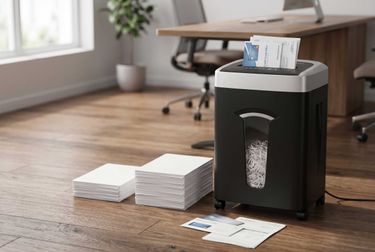
12-Sheet vs. 14-Sheet Paper Shredders: Choosing the Right Capacity
Picture this: you are finally tackling that massive stack of mail on a Sunday afternoon, sorting through a mountain of old tax returns, bank statements, and aggressively packaged credit card offers. Tossing these documents straight into the household recycling bin is practically handing over an open invitation for identity theft. You know you need a secure disposal method, but staring at a wall of technical specifications can be overwhelming. As you narrow down your options, you will quickly notice that 12-sheet paper shredders dominate the market for everyday consumers, while the 14-sheet models sit just one step above, promising a bit more power. The difference of two sheets might sound incredibly minor, but it actually plays a significant role in your machine's lifespan, its resistance to annoying paper jams, and how much noise it brings into your living space. So, when it comes to securely managing your family's personal information, which capacity truly makes sense for your home office?
Understanding Shredder Sheet Capacity
When you look at a retail box and see a specific sheet capacity listed, it is important to understand exactly how manufacturers arrive at that number. That rating refers to the absolute maximum number of standard, 20-pound copy paper sheets the motor can process in a single, perfectly aligned pass under controlled laboratory conditions. However, the realities of your living room or home office rarely match a pristine testing environment.
To fully grasp what a sheet rating means for your daily clearing routine, you have to look past the raw numbers and consider the physical variables of the mail you actually receive:
- Paper Weight and Texture: Standard printer paper is light, porous, and easy for steel blades to slice. Conversely, thick Manila envelopes, glossy magazine covers, and rigid promotional mailers demand significantly more motor torque.
- Folds and Creases: A single sheet of paper folded in half is registered by the machine's cutting cylinder as two sheets. A standard bank letter folded into thirds acts exactly like three sheets passing through the entry slot simultaneously.
- Hidden Fasteners: While high-quality machines are specifically engineered to chew through standard office staples and small paperclips, these rigid metal additions create momentary resistance, slightly reducing how smoothly a stack of paper is pulled through the feed.
Is a 12-Sheet Shredder Enough for Home Use?
For the vast majority of households, remote workers, and busy families, a machine that can handle a dozen pages at once hits the absolute sweet spot between mechanical efficiency and practicality. If you are someone who casually sorts through the daily mail delivery or sits down once a week to clear out accumulated household bills, a paper shredder 12 sheet capacity will effortlessly power through the task without breaking a sweat. This specific capacity tier is brilliantly engineered to match the natural rhythm of residential life. It allows you to feed a few thick, unopened envelopes or stubbornly folded statements directly into the slot without the tedious, frustrating chore of separating every single page by hand before disposal.
Beyond raw motor strength, this twelve-page capacity perfectly aligns with the spatial and auditory constraints of a standard home environment. The internal motors required to process a dozen sheets are deliberately calibrated to balance adequate cutting force with surprisingly quiet operation. This means you can securely destroy sensitive financial documents in your home office while your family watches television or studies in the very next room. From a design perspective, these units are generally compact enough to tuck neatly under a writing desk or slide alongside a standard filing cabinet without dominating your floor space. When you objectively evaluate the actual volume of paper an average family discards weekly, you realize that industrial-level torque is rarely necessary. Instead, your focus should be on smooth operation and smart features. A high-quality home shredder in this category will feature advanced anti-jam technology, automatically sensing resistance and reversing the feed if you accidentally insert too much paper, thereby protecting the motor and keeping your hands clean.
Benefits of Upgrading to a Higher Capacity
While a twelve-page limit comfortably covers standard residential needs, stepping up to a 14-sheet model—or exploring other high capacity shredders—brings noticeable, tangible advantages for specific types of users. If you run a demanding home business with high document turnover, frequently audit extensive physical financial records, or simply have the habit of letting sensitive documents pile up for six months before tackling them in one marathon cleaning session, that extra mechanical buffer genuinely matters. The primary benefit of upgrading is not strictly about having the ability to feed two additional pieces of paper into the slot; rather, it is about the underlying endurance, thermal threshold, and overall strength of the motor housing.
Higher capacity models are fundamentally built with more robust internal steel components. These upgraded parts can sustain significantly longer continuous run times before the machine's thermal sensor dictates a mandatory cool-down period. This translates directly to fewer frustrating interruptions when you are trying to shred an entire filing cabinet's worth of deep archives. Furthermore, a stronger motor handles the dense resistance of thick, unopened junk mail and integrated copper staples with much less operational strain. By not constantly pushing the motor to its absolute maximum limit, you significantly reduce the likelihood of mechanical wear and tear over a span of years. If your personal disposal habits involve processing massive volumes of paper in short, intensive bursts rather than engaging in light daily maintenance, making a slightly larger initial investment in a stronger motor can save you a considerable amount of time and mechanical frustration down the road.
Security and Cut Types: Micro-Cut vs. Cross-Cut
Capacity represents only half of the buying equation. The physical size of the destroyed paper particles ultimately determines your actual level of security. Choosing between different cut types directly influences how safe your discarded personal information remains once it is sitting in the recycling bin on your curb.
| Feature | Cross-Cut Technology | Micro-Cut Technology |
|---|---|---|
| Security Level | Medium (Typically DIN P-3 or P-4) | High (Typically DIN P-5 or above) |
| Particle Size | Roughly 5/32 x 1-1/2 inches | Roughly 5/32 x 15/32 inches |
| Ideal Use Case | Junk mail, basic utility bills, general documents | Tax returns, medical records, bank statements |
| Bin Efficiency | Fills up faster due to bulky, larger pieces | Holds more paper; tiny particles compact tightly |
| Processing Speed | Generally faster operational times | Slightly slower due to precision multi-directional cutting |
If you routinely handle highly sensitive financial data, medical records, or proprietary business documents at home, investing in a micro-shredder is strongly recommended. By turning a single piece of standard letter paper into over two thousand tiny, confetti-like pieces, it renders any attempt at document reconstruction virtually impossible. While standard cross-cut technology is certainly sufficient for everyday junk mail, the micro-cut option provides the ultimate peace of mind necessary for comprehensive identity theft prevention.
Essential Maintenance Tips for Peak Performance
Regardless of whether you ultimately select a standard twelve-page model or a heavier-duty option, performing regular, preventative maintenance is non-negotiable if you want consistent performance and longevity. Machine blades naturally dull and gather dense paper dust over time, which directly leads to increased operational noise, significantly slower processing speeds, and eventual catastrophic jams.
- Lubricate the Blades Regularly: Just like a car engine requires fresh oil, heavy-duty cutting cylinders desperately need lubrication to function. Run a specially formulated lubricant sheet through the machine every time you completely empty the wastebasket. This vital step keeps the metal blades sharp and prevents fine paper dust from cementing inside the plastic gears.
- Respect the Thermal Run Time: Every electrical unit has a maximum continuous run time before the internal thermal sensor automatically shuts the motor off to prevent dangerous electrical overheating. Always allow the machine to rest for the manufacturer's recommended cool-down period.
- Empty the Bin Before It Overflows: Letting the wastebasket fill completely to the very top causes freshly shredded particles to push back up directly into the cutting mechanism, creating severe, hard-to-clear internal jams that can damage the housing.
- Avoid Adhesive Materials Entirely: Never feed return address stickers, sticky shipping labels, or packing tape through the main slot. The adhesive glue will permanently stick to the metal teeth and attract endless amounts of paper dust, completely ruining the cutting efficiency and voiding your warranty.
Conclusion
Selecting the ideal machine for your home does not have to be a complicated puzzle of technical specifications. For the average household or remote worker, a machine that efficiently handles twelve pages offers the perfect, balanced blend of cutting power, quiet operation, and compact design. Conversely, slightly higher capacities serve incredibly well for those intensive, bulky clearing sessions and demanding home offices. The true key is matching the internal motor strength to your unique organizational routine, ensuring your sensitive data is destroyed safely without the constant headache of clearing mechanical jams. At Wingwise, we are passionately dedicated to securing your personal space with smart, highly efficient, and beautifully designed home office equipment. Explore our premium collection of reliable home shredders and essential maintenance accessories today, and confidently upgrade your home security with a machine built for flawless everyday reliability.
FAQ
How many sheets can a home shredder realistically handle at once?
While the retail box might state a specific maximum, it is a best practice to feed approximately 80% of the listed capacity to ensure incredibly smooth operation. For 12-sheet paper shredders, intentionally feeding 9 or 10 standard pages at a time dramatically reduces motor strain, prevents annoying jams, and significantly extends the life of your equipment.
Can a paper shredder 12 sheet capacity handle thick cardboard?
Most high-quality models operating in this specific range can easily and safely destroy standard plastic credit cards, often through a dedicated slot. However, thick corrugated cardboard packaging should be strictly avoided. The dense, fibrous material can severely jam the blades and permanently strip the internal plastic gears.
Why is my micro-shredder suddenly running slower than usual?
A sudden, noticeable drop in processing speed is almost always due to a severe lack of lubrication or a dense buildup of paper dust packed tightly into the cutting cylinders. Running a dedicated lubricant sheet through the machine usually restores the proper cutting speed and noticeably reduces operational grinding noise almost immediately.
Are high capacity shredders significantly louder than standard models?
Not necessarily. Many modern, high capacity shredders are intentionally engineered with advanced ultra-quiet operation technology and heavy-duty, noise-insulated housing. This superior engineering means they can easily process much more paper with higher torque without disrupting the peaceful, quiet environment of your home office.
How often should I use lubricant sheets for maintenance?
For absolutely optimal performance and longevity, you should lubricate the cutting blades every single time you empty the waste bin. If you only use the machine infrequently, running a sheet through at least twice a month is highly recommended to completely prevent the dreaded, frustrating reverse-feed jams.

©2025 shopastro All Rights Reserved.